

 |
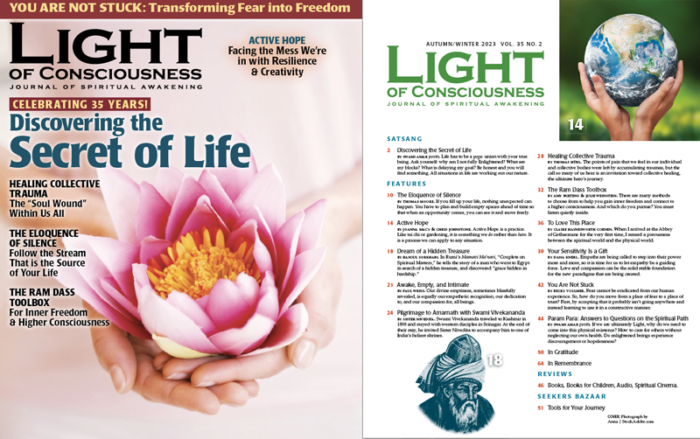
LIGHT OF CONSCIOUSNESS is known for its spiritual inspiration, its bold approach to the unity underlying all faiths and religions, and the emerging interface between science and spirituality. |
|
|
|
Conscious Meditation
by Swami Amar Jyoti
Whatever we do, it makes a big difference if we do it consciously. If you are doing the same thing without knowing why you are doing it, it will not produce the same results. Being conscious of what we are doing and why we are doing it solves all our problems. The difference is between consciousness and unconsciousness. That is why so many who meditate do not get results—they do not know what they are meditating upon. |
 |
|
We have seen aspirants who do very elaborate, technically superb worship but the results are not great; it is more mechanical than conscious. Even something seemingly non-religious, if you do it consciously it is more releasing than doing something religious unconsciously. Try it in your own life: if you are cooking or answering the phone, just be with it so that your mind is not elsewhere. Habitually we do many things at once, but none of it consciously. Consciousness makes the whole difference. It is releasing, comforting and joyful. Your energy surges up when you act consciously.
Great yogis can do two, three, four or five things at the same time with full awareness, but ordinarily we can do only one thing at a time. You may feel that you can do several things at once, but if you observe precisely you will see that you are conscious of only one thing at a time; you are doing the rest mechanically or habitually. In whatever you do consciously you are alive. God sees what you are doing consciously, not how many things you are doing. There is a famous adage: We are not known by what we do but by what we are. Only with that aliveness, that life force, do we truly exist.
Read full Satsang in the Autumn 2010 issue of Light of Consciousness |
| |
| |
|
| |
Repetition and Daily Practice: From Mindlessness to Mindfulness
by Andrew Holecek
Spiritual training involves scrubbing out deeply ingrained habits, which takes time and reiteration. It is like trying to flatten a scroll that has been coiled up for thousands of years. One pass with our hands across the surface won’t do it. We have to press it out again and again. The other way to flatten it would be the “extreme path to the middle,” where we try rolling it up in the opposite direction. Sounds good on paper but it doesn’t feel so good on our psyches as they are twisted from one extreme to another.
Accomplishment in any discipline involves repetition. If we want to build muscles, we don’t lift ten thousand pounds at one time, we lift a few pounds thousands of times. Just as repetition is the source of necessary hardship for a piano student aspiring to be a concert pianist, it remains so for spiritual students aspiring to wake up. We hear the same teachings continuously, we practice the same mantras ceaselessly, we return to the meditation cushion, and then to our breath, incessantly. In the Tibetan tradition, one does one hundred thousand prostrations, one hundred thousand mantra recitations, one hundred thousand mandala offerings, one million guru yoga recitations—and that’s just for starters. These may seem like outrageous numbers, but they are nothing compared to the numbers we have already accumulated in our practice of materialism. Read More
|
| |
 |
| |
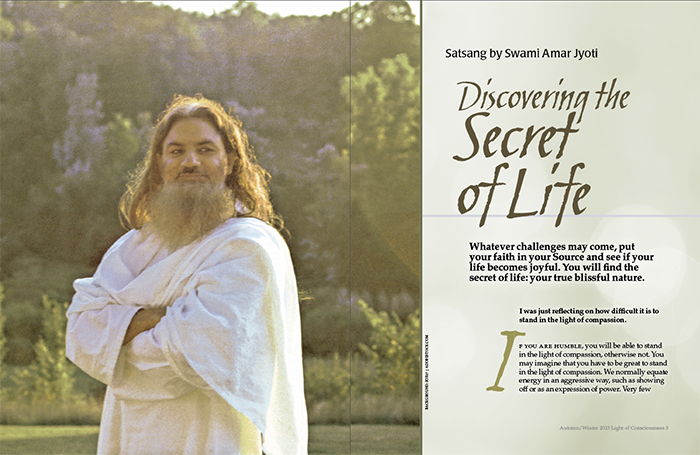
In each quarterly issue of LIGHT OF CONSCIOUSNESS you will find spiritual inspiration on your path through articles on wisdom teachings, spiritual practices, science and spirituality, prayer and meditation, healing, personal journeys, sacred ecology, transformational art, spiritual cinema, reviews and more - writings that will encourage and inform your journey. The knowledge and insights within each issue will help you live a more aware, conscious and fulfilling life.
|
|
|
 |
 |